Mechanical Stretchers
Recommended For
When you need a good, solid painting support thanks to the joinery design.
Design
Improved and adjusted from the 1950’s by James Lebron original using a specific Tite-Joint™ fastener.
Materials
Basswood or Eastern White Pine.
Stretcher Bar Profile
Continuous Bevel and L-Shaped.
What is a Mechanical Stretcher?
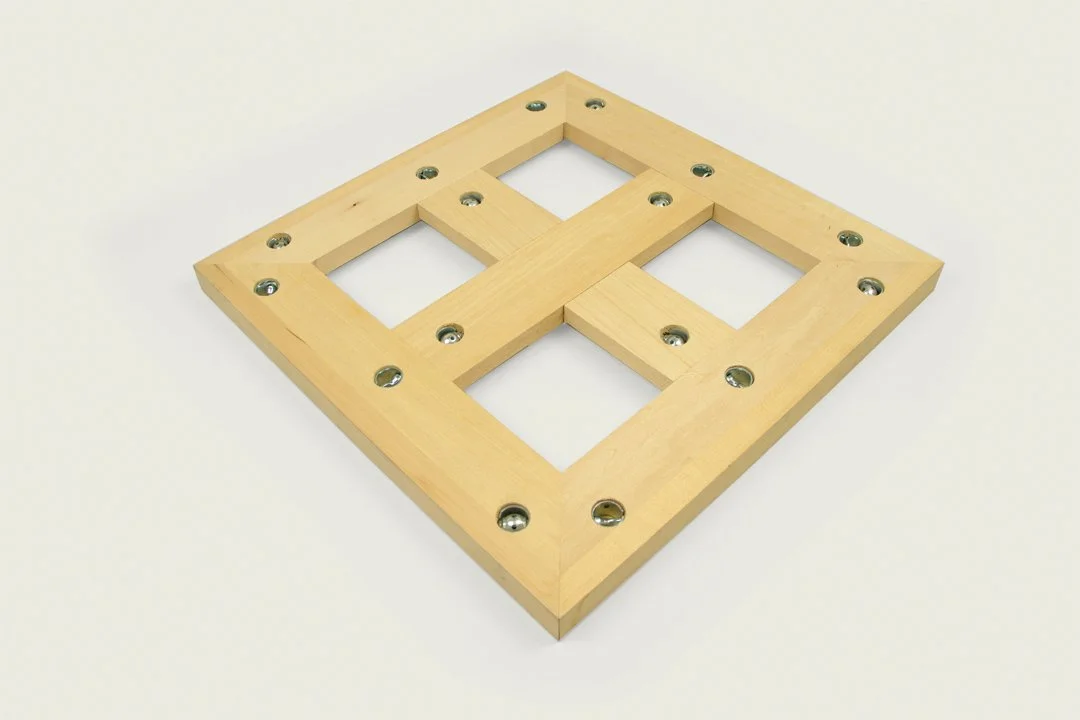
Comparably tried and true with our American Traditional Stretcher, Simon’s take on James Lebron’s enduring invention is a painting support built to remain perfectly square.
We have three profiles — Our continuous bevel option is constructed out of eastern white pine while our L-shaped and Continuous Spline profiles are produced with basswood in various thicknesses.
Stretcher Bar Profiles

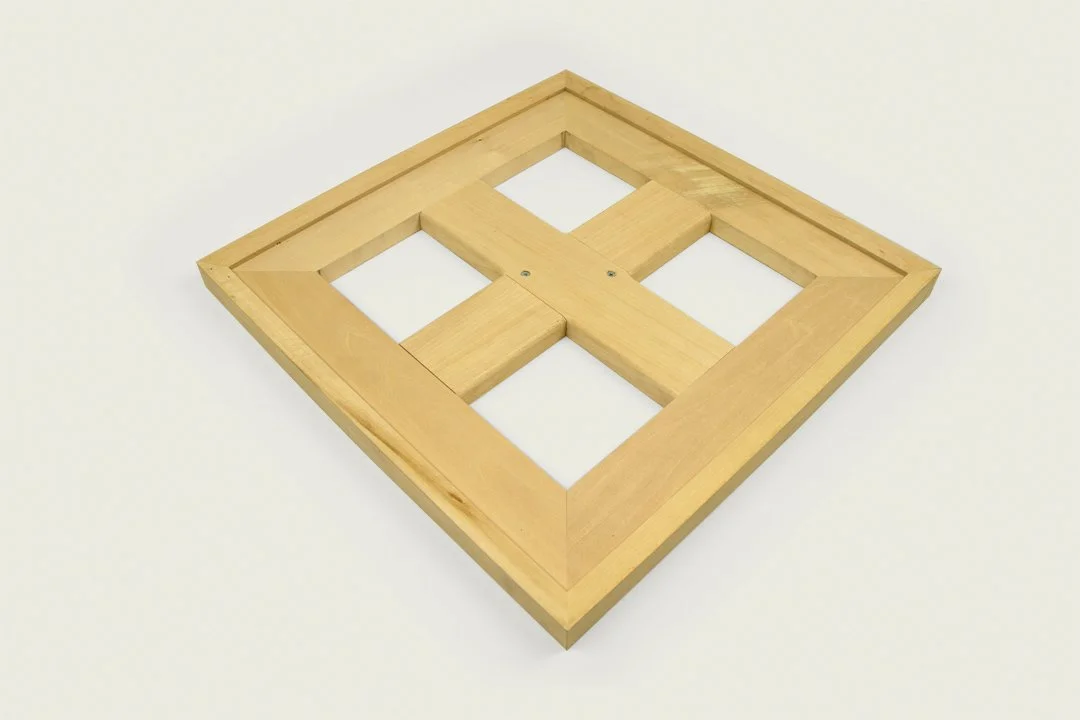
Continuous Bevel — Flat Back

L-Shape — Tongue & Groove

Continuous Spline —
(For thicker profiles)
Features of our Mechanical Stretchers
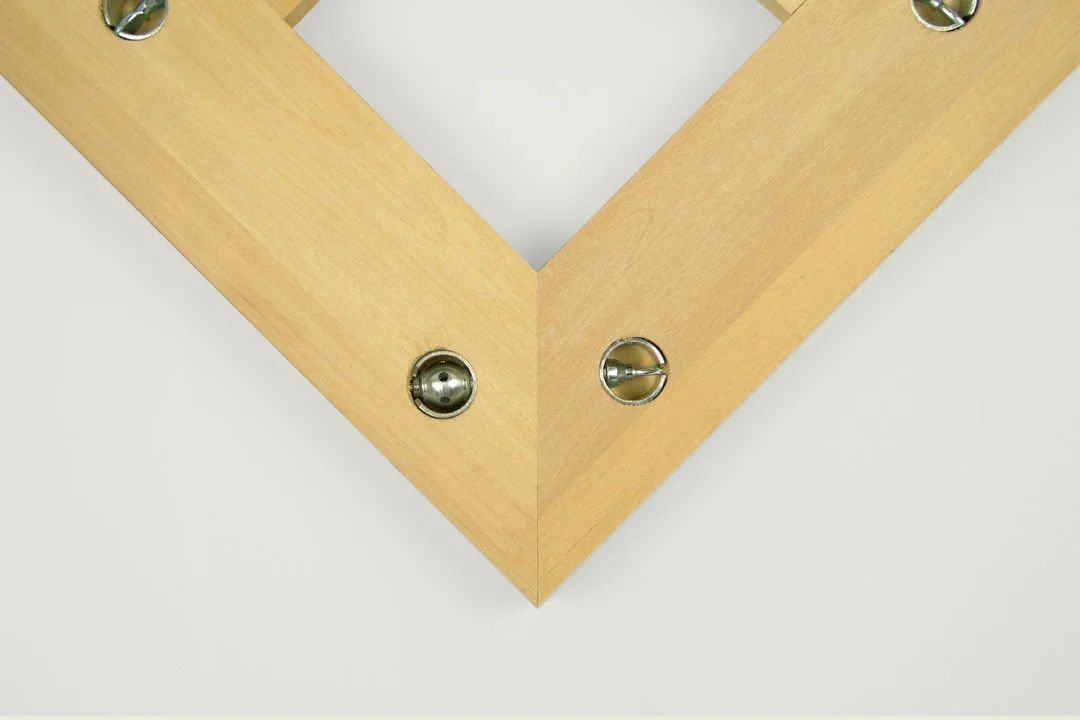
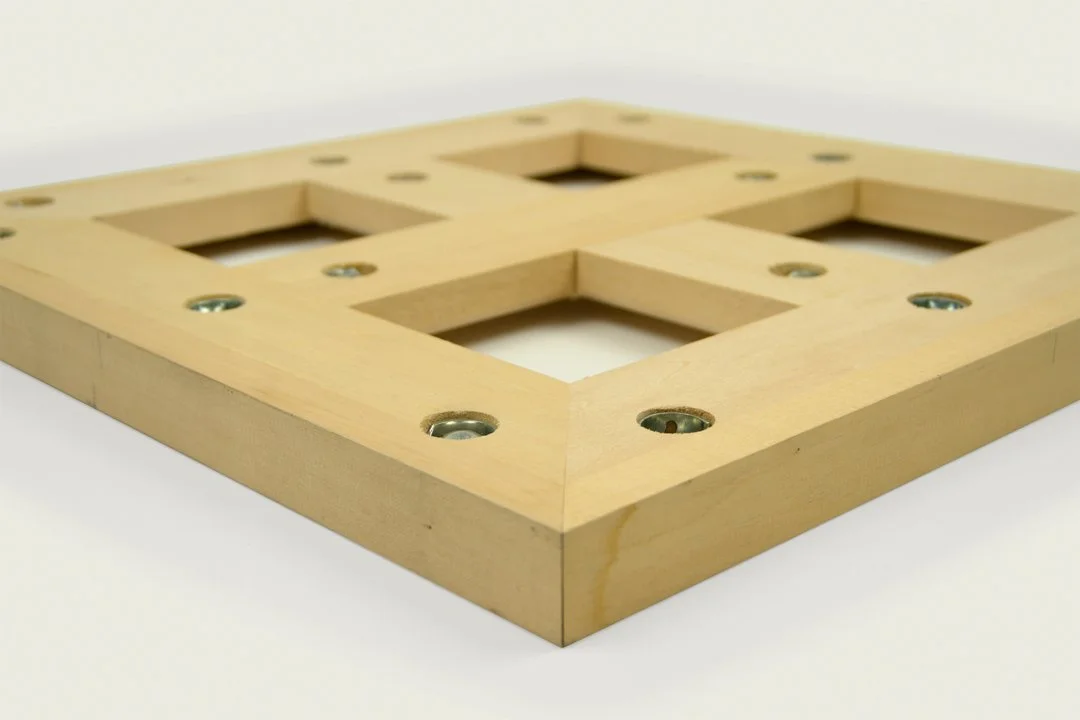
The Mechanical Stretcher’s adroit design uses Tite-Joint™ fasteners and two aluminum guiding pins (specifically designed by Simon for maximum keying capabilities) to the connecting miter and butt joint. Our unique design allows for fastener expansion to tighten the canvas.
Once the proper tension is achieved, wood shims placed between the hardware and guiding pins hold the tension while the hardware is tightened to stabilize the joint. “Tite” makes right.